The short answer
Cash flow forecasting shows how much cash your business will have in the coming weeks and months, based on when customers actually pay and when bills, payroll and loan payments actually leave. We build a rolling 13 week forecast and an annual budget for Arizona businesses and update both every month.
Why can a profitable business still run short on cash?
Profit and cash move on different clocks. You can book a profitable job today and not collect for 60 days, while payroll, rent, materials and loan payments leave on schedule. Growth makes this worse, because you often pay for the next job before the last one pays you.
Common reasons cash feels tight even when the profit and loss looks fine:
- Customers paying slowly, or a few large receivables sitting past 60 days
- Inventory or materials bought ahead of sales
- Loan principal payments, which reduce cash but never show up as an expense
- Owner draws and estimated tax payments
- Seasonal swings, like summer slowdowns in parts of the Arizona market
A forecast puts all of this on one timeline so you can see the low point coming and plan around it.
What is a 13 week cash flow forecast?
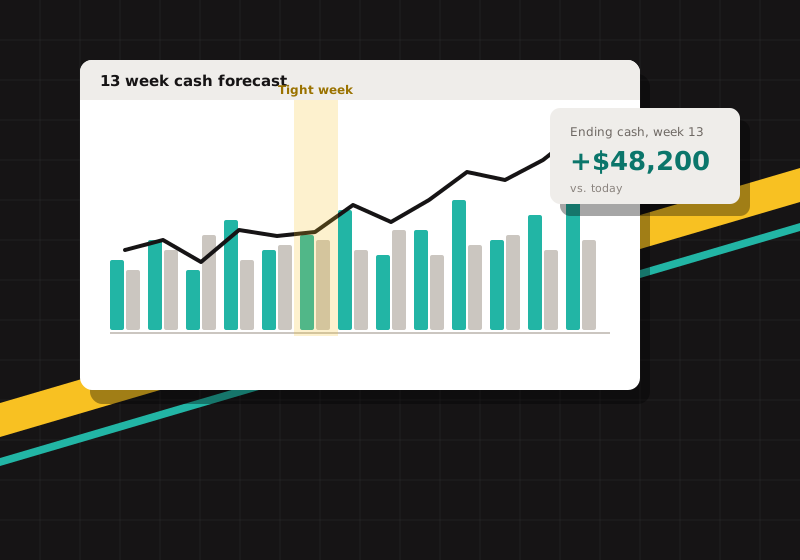
A 13 week cash flow forecast is a week by week projection of cash coming in and going out over the next quarter. It starts with your actual bank balance, layers in expected collections and payments, and shows your projected ending cash each week. It is the most practical short term planning tool a business owner can have.
Thirteen weeks is long enough to see a problem early and short enough to stay accurate. Each week the oldest week drops off, a new one is added and actual results replace estimates. We walk through how to build one in our post on building a 13 week cash flow forecast.
| Line | What goes in it |
|---|---|
| Beginning cash | Actual bank balance at the start of the week |
| Cash in | Customer collections, deposits, loan proceeds |
| Cash out | Payroll, vendors, rent, loan payments, taxes, owner draws |
| Ending cash | What is left, and whether it clears your minimum cushion |
How is a budget different from a cash forecast?
A budget is your plan for the year: expected revenue, costs and profit by month. A cash forecast tracks when money actually moves in the near term. You need both. The budget sets the target, the forecast tells you whether cash will hold up along the way.
We build your budget from real history in your books, then add what you know is coming: planned hires, price changes, equipment, seasonal patterns and growth goals. Each month we compare actual results to the budget so you can see what is on track and what needs attention.
Budget vs actual reporting is part of the monthly financial reporting package.
Can you model what happens if we hire, expand or lose a big customer?
Yes. Scenario planning is one of the most useful parts of forecasting. We model the options side by side (hire now or in three months, lease or buy, open a second location or wait) so you can see the cash impact before you commit.
- Hiring: the true monthly cost of a new employee, including payroll taxes and ramp up time
- Equipment: lease versus loan versus cash purchase
- Expansion: the cash needed to open a location and how long it takes to break even
- Downside: what happens if your largest customer pays late or leaves
When a scenario points toward financing, we move into funding and growth planning.
What do you need from us to build a forecast?
Access to your accounting software (usually QuickBooks Online), your current bank balances, a list of recurring bills and loan payments, and a short conversation about what you expect over the next year. Most of the rest comes straight from your books.
- Read only access to QuickBooks Online or your accounting system
- Accounts receivable and payable aging reports
- Loan and lease schedules
- Payroll schedule and headcount plans
- Known big events: purchases, seasonal swings, contracts starting or ending
Files move through our secure upload, never email.
How do we get started?
Free consultation
We talk through how cash moves in your business and what keeps surprising you.
Gather the data
We connect to your books and collect aging reports, loan schedules and payroll details.
Build the forecast and budget
You get a 13 week cash forecast and an annual budget built from your real history.
Walk through it together
Chris explains the low points, the assumptions and the levers you can pull.
Update every month
Actuals replace estimates, the forecast rolls forward and the budget stays current.
Cash Flow and Forecasting questions
How accurate is a cash flow forecast?
The first few weeks are usually very close because they rely on known bills and receivables. Accuracy drops further out, which is why we update the forecast regularly and compare it to actual results.
What software do you use?
We build forecasts from QuickBooks Online data in spreadsheets or forecasting tools, depending on what fits your business. You always get a version you can open and read.
Can I get a forecast without ongoing CFO service?
Yes. Some owners start with a one time forecast and budget, then decide whether monthly updates make sense.
How much cash should my business keep on hand?
Many businesses aim for two to three months of operating expenses, but the right cushion depends on how steady your revenue is and how quickly you collect. We help you set a number that fits.
Do you help with collections?
We show you who owes what and how long it has been outstanding, and help you set up a simple follow up routine. The calls and emails themselves stay with you or your team.
What if my books are behind?
A forecast is only as good as the history behind it. If your books need cleanup, our sister firm AZ Easy CPA can bring them current first.