
Quick answer
A small business usually needs a fractional CFO when its books are accurate but the owner still feels unsure about cash, pricing, hiring or a big decision. Common triggers are growth past roughly $1M in revenue, cash that surprises you, a loan or expansion on the horizon and reports nobody uses.
What does a fractional CFO actually do?
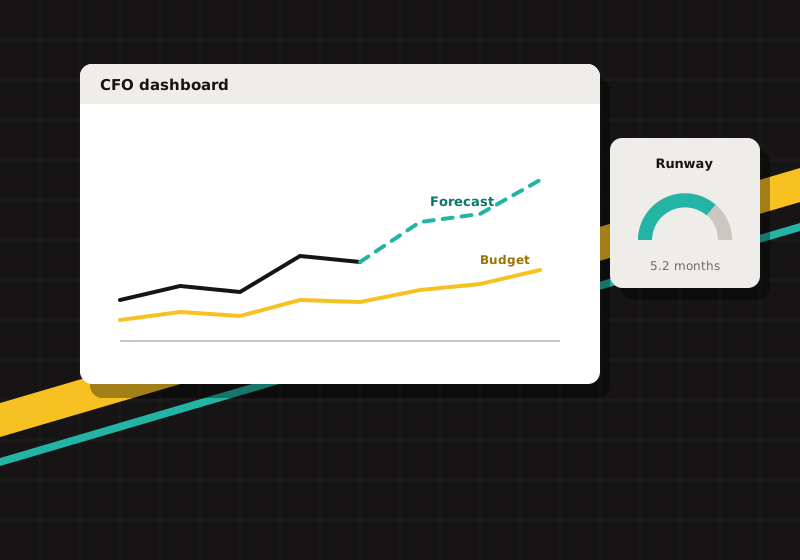
A fractional CFO is a part time chief financial officer. Instead of reporting what already happened, the work looks forward: how much cash you will have next quarter, whether you can afford a hire, which services or jobs earn the most and what a lender will want to see.
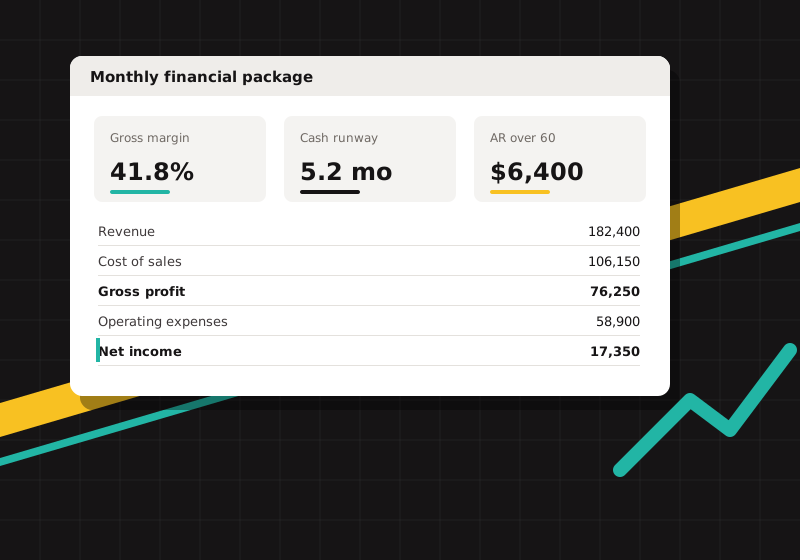
In a typical month, that means reviewing your financial statements with you, comparing results to your budget, updating a cash forecast, checking a short list of key performance indicators (KPIs) and agreeing on two or three actions. Between sessions, the CFO is someone you can call before making a decision rather than after.
The fractional part matters. You get senior financial judgment for a few hours a month instead of carrying a full time executive salary. For most small and midsize businesses, that is the right amount of CFO.
What are the signs your business is ready for a fractional CFO?
No single number makes a business ready. It is usually a combination of growth, complexity and decisions that feel bigger than they used to. These are the signals we see most often:
- Revenue is growing, but cash is not following. You are busier than ever, yet the bank balance feels just as tight. That gap between profit and cash is one of the most common reasons owners call.
- Cash surprises you. A payroll week sneaks up, a large customer pays late or a tax payment lands at the wrong time. A forecast would have shown it weeks earlier.
- A big decision is coming. Hiring a manager, opening a location, buying equipment or taking on a large contract. You want to see the impact before you commit.
- A lender, investor or partner is asking for more. Projections, a debt schedule, a business plan or statements in a specific format.
- You get reports but do not use them. The profit and loss arrives every month and goes straight into a folder.
- You are the only one thinking about the numbers. No one on the team is responsible for looking ahead financially.
- Your margins feel thinner than they should. Prices have not changed in a while, costs have, and you are not sure which work is actually profitable.
If two or three of these sound familiar, a conversation with a fractional CFO is usually worthwhile.
Is there a revenue level where a fractional CFO makes sense?
Many businesses start working with a fractional CFO somewhere around $1M in annual revenue, because that is often when payroll, debt, multiple service lines and bigger decisions start to stack up. That is a pattern, not a rule.
A $700K business preparing for an SBA loan may benefit more than a stable $3M business with simple operations. What matters is whether better planning would change the decisions you are making. If the answer is yes, revenue is a secondary question.
Do you need a CFO or a better bookkeeper first?
This is the most important question to answer honestly. A fractional CFO builds on top of accurate books. If your books are months behind, accounts do not reconcile or personal and business expenses are mixed together, the forecasts and KPIs will not be reliable.
| If this sounds like you | Start with |
|---|---|
| Books are behind or you do not trust them | Bookkeeping cleanup or catch up |
| Books are current, but you never look at the reports | Financial reporting |
| Books are current, but cash keeps surprising you | Cash flow forecasting |
| Books are current and decisions are getting bigger | Fractional CFO |
At AZ Easy, the bookkeeping side lives with our sister firm, AZ Easy CPA, so the two can work together without a handoff.
What should you expect in the first 90 days?
The first three months are about building a foundation you will use for years. A typical sequence looks like this:
- Month one: review the books, fix anything that would distort the numbers and agree on goals.
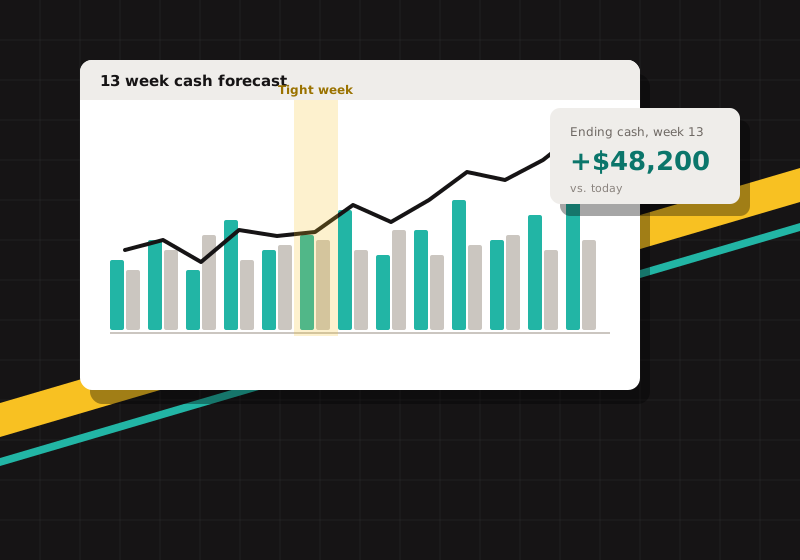
- Month two: build an annual budget and a rolling 13 week cash forecast, and choose three to six KPIs.
- Month three: hold the first full monthly session comparing actual results to the plan, and adjust.
By the end of the first quarter, most owners have a clearer picture of cash, a short list of numbers to watch and a regular rhythm for making decisions. The value tends to grow over time as history builds and the forecast gets sharper.
How do you choose the right fractional CFO?
Look for someone who understands businesses your size, explains things in plain language and is honest about what they do not do. A few practical questions to ask:
- Are you a CPA, and who will I actually work with each month?
- Have you worked with businesses in my industry?
- How do you price the work, and what exactly is included?
- What will I receive each month, and how often will we meet?
- Do you coordinate with my bookkeeper and tax preparer?
The U.S. Small Business Administration has a helpful overview of managing your business finances that is worth reading alongside any conversation with a CFO.
What kinds of decisions does a fractional CFO help with?
It helps to picture the work in real situations. These are the kinds of questions owners bring to a monthly session:
- A therapy group practice wants to add two clinicians. The CFO models the salary cost, the months it takes each new clinician to fill a caseload and how insurance payment timing affects cash in the meantime.
- A plumbing company is considering a fourth truck and a new technician. The CFO compares buying, financing and leasing, then shows how much additional work the crew needs to cover the cost.
- A restaurant sees sales up but profit flat. The CFO breaks down prime cost by month and finds labor scheduling, not food cost, is the gap.
- A dental practice is approached about a buildout loan. The CFO prepares projections and a debt schedule so the owner knows the payment fits before talking to lenders.
- A nonprofit has a large grant ending next year. The CFO builds a budget by program and shows how many months of reserves remain under different funding scenarios.
In each case, the owner still makes the call. The CFO makes sure the decision is made with clear numbers and a realistic view of cash.
What does a fractional CFO not do?
Being clear about the boundaries helps you build the right team. A fractional CFO generally does not do your day to day bookkeeping, run payroll, prepare tax returns or provide legal advice. Those jobs belong to your bookkeeper, payroll provider, tax preparer and attorney.
What the CFO does is connect those pieces. When a decision touches taxes, the CFO talks with your tax preparer. When the books need restructuring for better reporting, the CFO works with your bookkeeper. Think of the role as the person who keeps the financial side of the business pointed in the same direction.
A fractional CFO also cannot guarantee outcomes. Forecasts are estimates, lenders make their own decisions and markets change. The goal is better information and earlier warning, not certainty.
Common questions
What is the difference between a fractional CFO and an outsourced accountant?
An outsourced accountant typically handles bookkeeping, reconciliations and reporting. A fractional CFO focuses on planning: forecasts, budgets, KPIs, pricing and funding decisions, built on top of accurate books.
How many hours a month does a fractional CFO work?
It varies with the business and the season. Many engagements involve a monthly session plus preparation and availability for questions in between. Busy periods, like a loan application, may need more time.
Can a fractional CFO work remotely?
Yes. Most of the work happens through shared files, accounting software and video calls. Many owners still like an occasional in person session.
Will a fractional CFO replace my bookkeeper?
No. The bookkeeper keeps the records accurate. The CFO uses those records to plan. The two work best together.
Want help with this? See our fractional cfo service or book a free consultation with Chris.
 CB
Chris Badulescu is a Certified Public Accountant and the founder of AZ Easy CPA and AZ Easy CFO in Chandler, Arizona. He works with growing businesses on cash flow, budgets, reporting and funding preparation.
Related posts
How much does a fractional CFO cost in Arizona?
The pricing models fractional CFOs use, what drives the cost up or down, and how it compares to hiring a full time CFO.
How to build a 13 week cash flow forecast
A step by step guide to the most practical short term planning tool a business owner can have.